

Robotimize Launches Synslai Mirror Therapy System Through ACE™ Partnership with Rehabotics

Synslai for rehabilitation of upper limb motor function following neuromuscular injury—bringing precision and objective measurement to evidence-based approach.
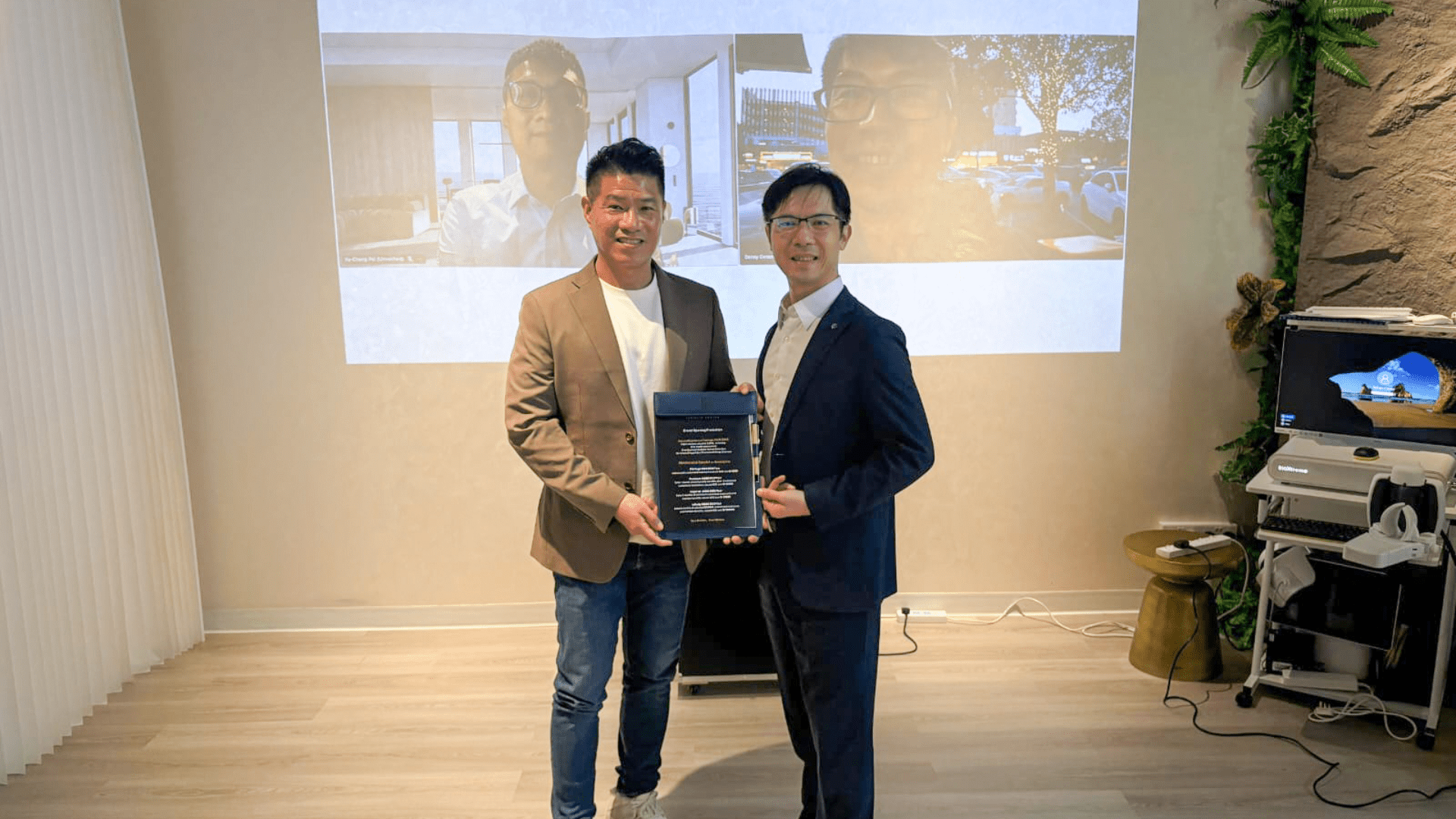
Zen Koh and Prof. Charles Huang formalize MotusAcademy collaboration with Rehabotics, witnessed virtually by Dr. Pei Yu-Cheng and Prof. Denny Oetomo

Robotimize team demonstrates Synslai's features to international healthcare professionals, illustrating mirror therapy applications in upper limb neurorehabilitation protocols.

Synslai mirror therapy platform designed for clinical rehabilitation environments, supporting structured upper limb motor function recovery protocols.

ACE™ partnerships bring specialized rehabilitation technologies from global innovators—curated collaborations expanding comprehensive care through evidence-based solutions.
Robotimize launches Synslai mirror therapy system through ACE™ partnership with Rehabotics, advancing evidence-based upper limb neurorehabilitation globally.
The Synslai system represents strategic alignment between Robotimize's mission to advocate for more pathways to comprehensive rehabilitation solutions and Rehabotics' commitment to translating engineering innovation into practical clinical tools. Mirror therapy leverages neuroplasticity principles to enhance motor recovery. Synslai brings precision, objective measurement, and clinical workflow integration to this evidence-based therapeutic approach.
"Synslai exemplifies why we built the ACE™ partnership model—to bring specialized, clinically validated technologies into our rehabilitation ecosystem. Rehabotics' focus on dexterity and functional recovery aligns perfectly with our understanding that hand function restoration is fundamental to independence and quality of life for stroke survivors and neurological patients," said Even Koh, Group General Manager, Robotimize Group.
The partnership extends beyond product distribution to encompass strategic collaboration accelerating safe, evidence-based, dexterity-focused neurorehabilitation globally—combining Rehabotics' engineering excellence with Robotimize's regional presence, clinical networks, and implementation expertise across Asia-Pacific, Europe, and emerging markets.
Synslai Technology: Bilateral Training Platform
Synslai addresses a critical rehabilitation challenge: restoring hand and upper limb function following neuromuscular and musculoskeletal injuries affecting motor control. Hand function underpins activities of daily living—feeding, dressing, grooming, writing, using communication devices—making upper limb recovery essential for independence and community participation.
The Synslai system is a medical-grade bilateral upper limb training platform designed specifically for patients with impaired arm motor function. The device enables the unaffected arm to guide the affected arm through synchronized bilateral movements on an X-Y plane platform, utilizing mirror therapy principles to facilitate motor recovery through unaffected limb-guided movement patterns. This approach promotes neuroplasticity and motor relearning through repetitive, task-specific training.
Traditional mirror therapy employs a vertically positioned mirror to separate patients' arms—the affected limb hidden from view behind the reflective surface, while the unaffected limb performs movements on the visible side. Patients observe their healthy limb's reflection appearing precisely where their impaired limb actually rests, creating the compelling illusion that both arms move symmetrically. This visual feedback can facilitate motor recovery by engaging the brain and reestablishing neural connections through perceived bilateral movement.
However, traditional implementation faces practical limitations: maintaining precise mirror positioning throughout therapy sessions, ensuring consistent therapy protocols across different patients and clinicians, quantifying patient progress objectively beyond subjective observation, and integrating seamlessly into busy clinical workflows where therapists manage multiple patients with diverse conditions.
Synslai addresses these challenges through engineered solutions that preserve mirror therapy's neuroplasticity benefits while adding precision, measurement capabilities, and clinical usability. Synslai supports proximal upper limb rehabilitation—focusing on shoulder, elbow, and arm movements—while helping patients regain functional independence in daily activities through structured, repeatable training protocols.
"Upper limb rehabilitation benefits from diverse therapeutic approaches addressing different recovery dimensions—motor execution, sensory integration, neuroplastic facilitation, functional task practice. Synslai strengthens our capacity to offer evidence-based mirror therapy within comprehensive care frameworks where multiple modalities work together, with Synslai focusing on proximal upper limb coordination while complementary technologies address other upper limb function," said Even Koh, Group General Manager, Robotimize Group.
Strategic Partnership: Formalizing Collaborative Excellence
The memorandum of understanding between MotusAcademy and Rehabotics, signed by Zen Koh, Strategic Advisor at Robotimize Group, and Prof. Charles Huang of Rehabotics, with virtual witness from Dr. Pei Yu-Cheng of Rehabotics and Prof. Denny Oetomo, Co-Founder and CTO of Robotimize Group, formalizes strategic collaboration advancing safe, evidence-based, dexterity-focused neurorehabilitation globally.
The partnership structure reflects ACE™ philosophy—curated collaborations built on shared values rather than transactional relationships. Both organizations prioritize clinical excellence, evidence-based practice, patient-centered innovation, product quality and safety, and commitment to continuous improvement based on clinical feedback and emerging research.
This values alignment matters practically. Rehabilitation technology partnerships succeed when both parties maintain rigorous safety standards, invest in clinical validation, support healthcare providers comprehensively, and continuously refine products based on real-world implementation experiences. Companies cutting corners on quality, overpromising clinical benefits, or abandoning customers post-sale undermine the entire rehabilitation technology field by eroding clinician and patient trust.
Rehabotics' commitment to working closely with clinical partners throughout product development resonates with Robotimize's own collaborative approach. Effective rehabilitation technologies emerge from iterative dialogue between engineers understanding technical possibilities and clinicians understanding patient needs, workflow constraints, and outcome priorities. This participatory development process produces systems more likely to achieve sustained clinical adoption.
Prof. Denny Oetomo's involvement in formalizing the partnership reflects Robotimize's commitment to ensuring that ACE™ collaborations meet rigorous technical and clinical standards. As both technology developer and academic researcher, Prof. Oetomo brings critical perspective on evaluating rehabilitation technologies—examining not just marketing claims but actual evidence, understanding engineering trade-offs, and assessing whether innovations genuinely advance clinical practice.
"Rehabotics demonstrates the engineering rigor and clinical collaboration that ACE™ partnerships require. Their focus on translating neuroplasticity research into practical tools, commitment to evidence-based development, and emphasis on dexterity and functional outcomes align with the standards we maintain across our technology portfolio," said Prof. Denny Oetomo, Co-Founder and CTO, Robotimize Group.
Clinical Demonstrations: Showcasing Synslai's Rehabilitation Applications
International healthcare professionals visiting Robotimize's regional hubs experience comprehensive Synslai demonstrations illustrating the system's clinical applications, workflow integration, and role within broader upper limb rehabilitation protocols. These hands-on experiences enable clinicians to evaluate whether Synslai addresses their specific patient populations, facility constraints, and outcome priorities.
The demonstrations emphasize Synslai's focus on dexterity and functional recovery—not just gross motor movement but the fine motor control enabling activities of daily living. Hand rehabilitation succeeds when patients regain ability to manipulate objects, perform precision tasks, coordinate bimanual activities, and execute the countless hand movements that daily life requires. Technologies addressing only shoulder or elbow function while neglecting hand dexterity leave patients functionally dependent despite apparent motor gains.
International delegates particularly value understanding how Synslai integrates with other rehabilitation modalities. Mirror therapy rarely functions as standalone intervention—patients benefit from combining neuroplasticity facilitation through mirror therapy with motor assistance from robotic devices, neuromuscular activation through functional electrical stimulation, strengthening exercises addressing underlying weakness, and functional task practice applying recovered capabilities to meaningful activities.
The demonstrations also address practical implementation considerations: setup time and workflow efficiency, patient positioning and comfort during therapy sessions, data collection and progress monitoring, maintenance requirements and technical support needs, and training approaches ensuring clinical teams utilize systems effectively. These operational factors often determine whether technologies deliver theoretical benefits in real-world clinical settings.
Synslai in Practice: Implementation Planning for Clinical Settings
Synslai's clinical implementation pathway demonstrates how evidence-based mirror therapy can integrate into contemporary rehabilitation practice. Healthcare providers considering adoption evaluate deployment across diverse settings—hospital-based rehabilitation units serving acute stroke patients, outpatient clinics supporting ongoing recovery, specialized neurological rehabilitation centers, and potentially home-based programs extending therapy access beyond facility walls.
Successful implementation requires technologies that accommodate clinical workflow realities. Therapists manage multiple patients with diverse conditions, operate under time constraints, navigate documentation requirements, and coordinate with interdisciplinary teams. Rehabilitation technologies succeed when they enhance rather than complicate these workflows—providing clinical value that justifies the time, effort, and resources required for adoption.
Synslai's design reflects Rehabotics' commitment to practical clinical tools. The system's straightforward setup, intuitive operation, and clear patient instruction protocols address workflow efficiency concerns that often determine whether technologies achieve sustained clinical utilization or become expensive equipment gathering dust. These usability features emerge from working closely with clinical partners who provide candid feedback about what works and what doesn't in actual practice environments.
Robotimize's partnership with Rehabotics includes comprehensive implementation support: clinical training programs building therapist competency in evidence-based mirror therapy protocols, workflow integration consultation addressing facility-specific operational considerations, ongoing technical and clinical support ensuring sustained utilization, outcome measurement frameworks demonstrating value to institutional stakeholders, and knowledge exchange connecting early adopters with healthcare providers considering implementation.
ACE™ Portfolio: Curated Ecosystem for Comprehensive Rehabilitation
Synslai joins Robotimize's ACE™ portfolio alongside specialized technologies from carefully selected global partners. Each ACE™ partnership undergoes rigorous evaluation examining clinical effectiveness through published research and validation studies, safety profiles and regulatory approvals across key markets, evidence of real-world implementation and clinical adoption, alignment with patient-centered care principles and ethical standards, and compatibility with Robotimize's mission to advocate for comprehensive rehabilitation solutions.
The ACE™ model also enables strategic portfolio development responding to evolving rehabilitation needs and emerging evidence. As research identifies effective therapeutic approaches, clinical practice evolves, patient expectations change, and healthcare systems adapt, Robotimize can integrate relevant specialized technologies through new partnerships.
Synslai's addition strengthens ACE™ coverage of upper limb rehabilitation—an area where VivantePlexus™ platform technologies like HandVivante™ MirrorHand and GripVivante™ provide robotic assistance and functional electrical stimulation, while Synslai adds mirror therapy's neuroplasticity facilitation. Together, these complementary approaches enable comprehensive upper limb rehabilitation addressing motor execution, sensory integration, neural reorganization, and functional task practice.
Healthcare providers benefit from ACE™ architecture by accessing diverse, evidence-based technologies through unified partnership with Robotimize rather than navigating fragmented relationships with multiple vendors. This consolidation simplifies procurement, training coordination, technical support, and strategic planning while ensuring that all technologies meet consistent quality and evidence standards.
"ACE™ reflects our belief that comprehensive patient care requires specialized expertise across diverse therapeutic domains. Rather than attempting to develop everything internally, we partner strategically with innovators like Rehabotics who bring deep knowledge, clinical validation, and commitment to excellence in specific rehabilitation areas. Patients benefit from best-in-class solutions working together," said Kerry Guo.
Rehabotics: Forward-Thinking Approach to Neurorehabilitation Innovation
Rehabotics represents the type of innovation partner that ACE™ seeks—organizations combining engineering excellence with clinical collaboration, evidence-based development with practical usability, and ambitious vision with implementation realism.
The company's focus on neurorehabilitation solutions supporting dexterity and functional recovery reflects deep understanding that technology succeeds when it addresses what matters most to patients—regaining ability to perform meaningful activities that enable independent, dignified lives. Engineering sophistication means little if resulting devices don't restore functional capabilities that patients value.
Rehabotics' commitment to working closely with clinical partners throughout development cycles exemplifies participatory innovation—where clinicians shape technologies rather than merely receiving finished products. This collaborative approach produces systems that accommodate clinical workflow realities, address actual patient needs rather than theoretical problems, and incorporate feedback that iterative refinement provides.
"Rehabotics exemplifies how medical technology companies should operate—grounding innovation in solid evidence, developing collaboratively with clinical partners, prioritizing patient outcomes over commercial expediency, and maintaining commitment to quality throughout product lifecycles. These characteristics make them ideal ACE™ partners advancing rehabilitation practice globally," said Zen Koh, Strategic Advisor, Robotimize Group.
Looking Forward: Advancing Mirror Therapy and Comprehensive Neurorehabilitation
The Synslai launch represents the beginning of an ongoing collaboration advancing comprehensive rehabilitation globally. Future initiatives will explore clinical outcome studies measuring Synslai effectiveness across diverse patient populations, combination therapy protocols integrating mirror therapy with robotic assistance and functional electrical stimulation, training programs building clinical expertise in evidence-based mirror therapy implementation, and expanded access bringing specialized neurorehabilitation technologies to underserved markets.
As rehabilitation technology continues evolving—through deeper understanding of neuroplasticity mechanisms, integration of AI and sensor technologies, expansion of telerehabilitation extending care access, and growing evidence base guiding clinical practice—partnerships between specialized innovators and comprehensive ecosystem builders become increasingly important. No single organization can excel across all rehabilitation domains, but strategic collaborations enable patients to benefit from diverse expertise working toward shared goals.
Robotimize's ACE™ model and partnerships like that with Rehabotics demonstrate how the rehabilitation technology field can advance—through curated collaborations built on shared values, evidence-based practice, patient-centered innovation, and unwavering commitment to the healthcare professionals and patients whose lives depend on rehabilitation technologies delivering on their promises.
About Rehabotics
Rehabotics is a medical technology company focused on neurorehabilitation solutions that support dexterity and functional recovery. Working closely with clinical partners, Rehabotics translates engineering innovation into practical tools for daily practice, with a commitment to product quality, safety, and continuous improvement. The company's evidence-based approach to rehabilitation technology development emphasizes neuroplasticity principles, functional outcomes, and clinical usability—producing systems that therapists can implement effectively and patients can engage with successfully in pursuit of independence and quality of life.
About Robotimize Group
Robotimize Group is a next-generation health technology company headquartered in Singapore, specialising in intelligent rehabilitation robotics and digital neurotechnologies. Through VivantePlexus™, its integrated rehabilitation ecosystem, and ACE™, its strategic partnerships portfolio, Robotimize delivers comprehensive solutions that support motor, cognitive, and neurological recovery across hospital, home, and community settings. With regional hubs in Malaysia and Europe and a growing international partner network, Robotimize is redefining rehabilitation delivery—making it more personal, adaptive, and accessible. For more information, visit: www.robotimize.tech
Jerry HONG
Robotimize Group
+ +60 11-1224 1674
email us here
Legal Disclaimer:
EIN Presswire provides this news content "as is" without warranty of any kind. We do not accept any responsibility or liability for the accuracy, content, images, videos, licenses, completeness, legality, or reliability of the information contained in this article. If you have any complaints or copyright issues related to this article, kindly contact the author above.
