

Bringing you the latest news on science and technology
Provided by AGP
Safety Vision Releases New White Paper Examining Rising Liability and Compliance Risks Across Fleet Transportation

Safety Vision Logo -
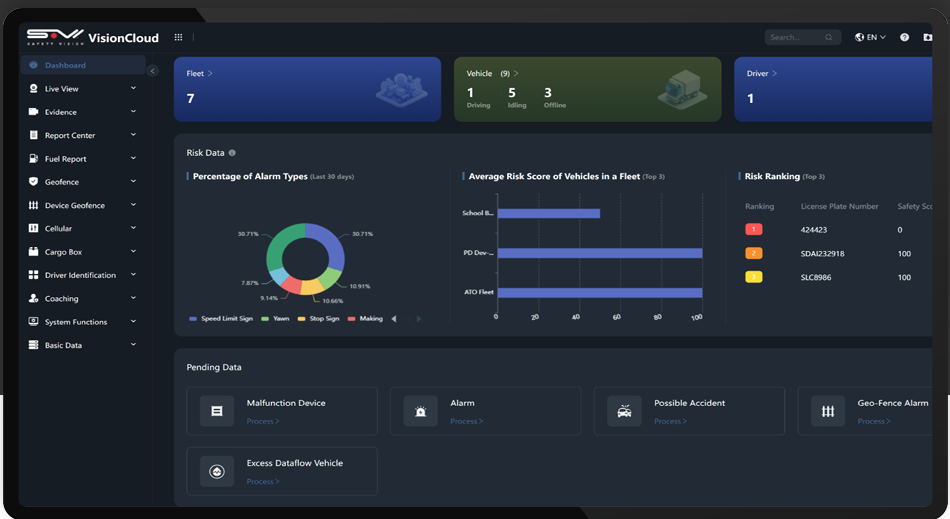
VisionCloud Fleet Management Software
Commercial fleet Industry analysis shows onboard video proves up to 75% of injury claims false, exonerates drivers in more than half of disputed incidents.
Fleet operators face increasing legal and compliance exposure and integrated video and telemetry solutions help organizations move from reactive claims management to proactive, evidence-based defense.”
HOUSTON, TX, UNITED STATES, May 13, 2026 /EINPresswire.com/ -- Fleet operators across public transit, school transportation and commercial trucking face an unprecedented convergence of rising litigation costs, record jury awards and intensifying federal reporting obligations, according to a new white paper released by Safety Vision, LLC. The report, titled “Liability, Litigation & Compliance in Fleet Operations,” presents evidence that integrated HD video surveillance coupled with GPS telemetry has become the most cost-effective and legally defensible tool available to fleet operators seeking to reduce claims exposure and satisfy regulatory requirements.— Nima Ostad, Safety Vision COO
The white paper draws on federal enforcement data, research from the American Transportation Research Institute, the U.S. Department of Justice, the Federal Transit Administration and fleet technology studies across three distinct markets. Its findings underscore the financial urgency confronting fleet operators: the Department of Justice reported False Claims Act settlements and judgments exceeding $6.8 billion in fiscal year 2025, a new single-year record, while median nuclear verdicts in trucking cases climbed to $51 million in 2024.
Transit Agencies: Proving Claims False
In the public transit sector, agencies face persistent challenges from fraudulent and exaggerated injury claims compounded by expanding National Transit Database reporting obligations. The white paper cites the North Carolina Department of Transportation, which achieved over 90% fleet-wide adoption of onboard video surveillance within 12 months. Video review revealed that 75% of passenger injury claims filed against the agency were false, resulting in dramatically reduced insurance costs and payouts. The Bipartisan Infrastructure Law and subsequent FTA rule changes have further expanded documentation requirements, making timestamped video evidence critical for accurate compliance reporting.
School Districts: Reducing False Claims, Restoring Trust
School districts face a unique liability profile driven by the heightened scrutiny that accompanies transporting children. The average settlement for a school bus accident is approximately $249,000, according to data from 62 cases recorded between 2019 and 2024, with wrongful death and catastrophic injury claims routinely exceeding those figures. Districts equipped with comprehensive camera systems report exponential reductions in false claims and faster resolution of complaints. Stop-arm camera enforcement programs have demonstrated a greater than 90% deterrence rate among cited violators, the paper found.
Commercial Fleets: Confronting the Nuclear Verdict Crisis
The commercial trucking sector faces what the white paper describes as an existential litigation crisis. ATRI research documents that the average size of jury verdicts exceeding $1 million in trucking cases grew from $2.3 million in 2010 to $22.3 million in 2018, a 967% increase. In 2024, the trucking and automotive sectors experienced 15 substantial verdicts totaling more than $4.1 billion, while insurance premiums hit a record $0.102 per mile. Among fleets that experienced accidents, 53% were able to exonerate a driver using video telematics evidence. One fleet audit of 3,000 dashcams found that incidents involving trucks with non-functional cameras cost $2 million more than those with operational systems.
The insurance market impact has been equally severe. Swiss Re scored the trucking sector as one of the most affected by mega verdicts, noting excess coverage rate increases exceeding 75%. Small fleets pay more than three times as much per mile in insurance premiums as large fleets, and some insurers now require video surveillance technology as a condition of policy renewal.
The white paper concludes that in a legal and regulatory environment defined by record federal fraud recoveries, escalating nuclear verdicts and continuously expanding reporting obligations, integrated video surveillance and GPS telemetry have transitioned from operational enhancements to legal and financial necessities for fleet operators of all sizes. The report includes analysis and citations from organizations including the Federal Transit Administration, the U.S. Department of Justice, the American Transportation Research Institute, insurance industry sources, and transportation safety research groups.
The full white paper is available for download here and at the company’s website at www.safetyvision.com.
About Safety Vision
Safety Vision, LLC is a provider of integrated HD video surveillance, GPS telemetry and fleet safety technology solutions serving the transit, school transportation and commercial vehicle markets. The company’s hardware, software and cloud solutions deliver the evidentiary infrastructure that agencies, districts and fleets need to defend their operations, protect their people and demonstrate regulatory compliance. For more information, visit www.safetyvision.com.
Bill Rieck, Director of Marketing
Safety Vision, LLC
+1 713-929-1045
email us here
Visit us on social media:
LinkedIn
Instagram
Facebook
YouTube
X
Other
The New VisionCloud™ VMS
Legal Disclaimer:
EIN Presswire provides this news content "as is" without warranty of any kind. We do not accept any responsibility or liability for the accuracy, content, images, videos, licenses, completeness, legality, or reliability of the information contained in this article. If you have any complaints or copyright issues related to this article, kindly contact the author above.
