
Bringing you the latest news on science and technology
Provided by AGP
Better Living: Newly discovered myxobacterium in a cyanobacterial community performs photosynthesis
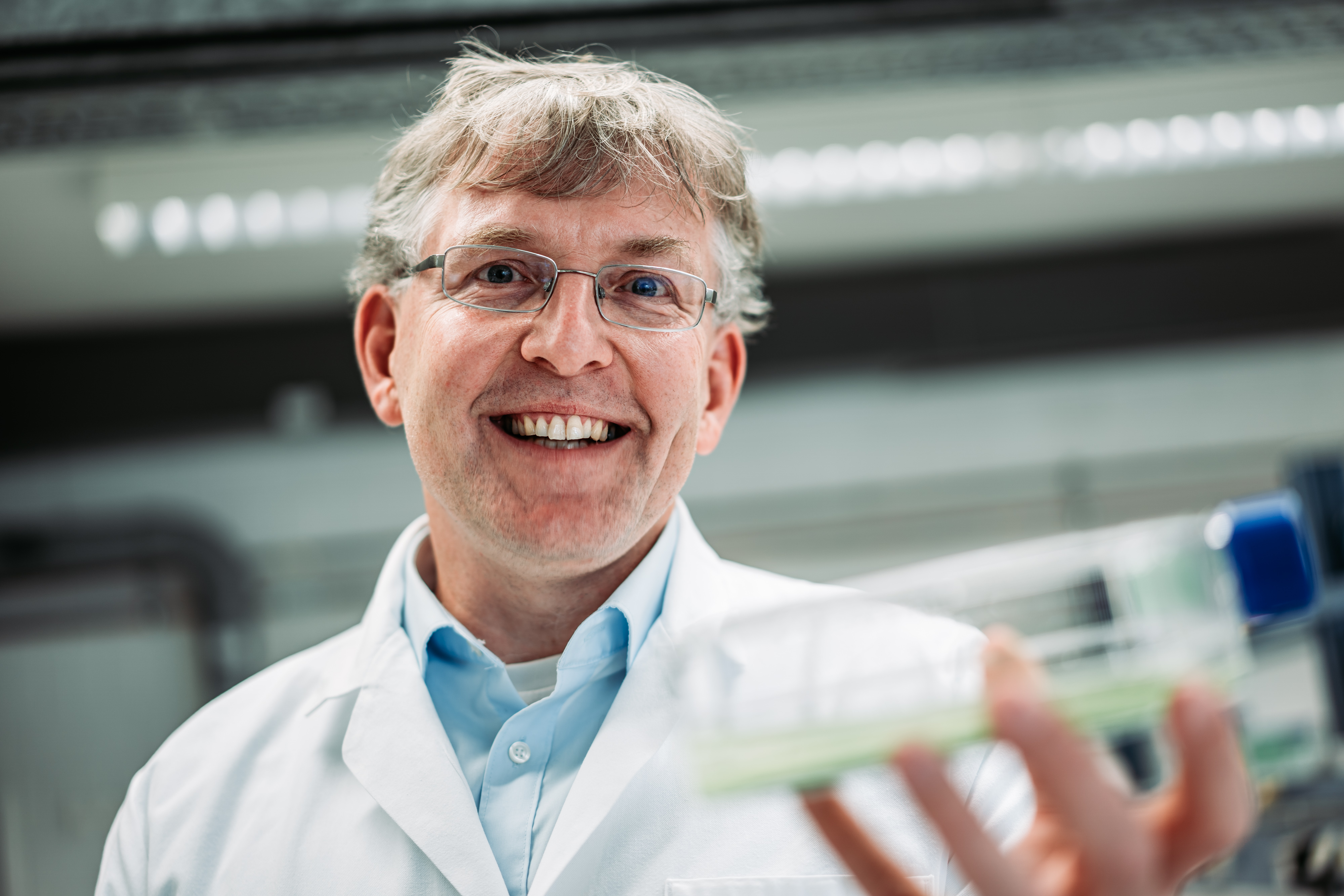
Prof. Dr. Jörn Petersen, Leibniz Institute DSMZ
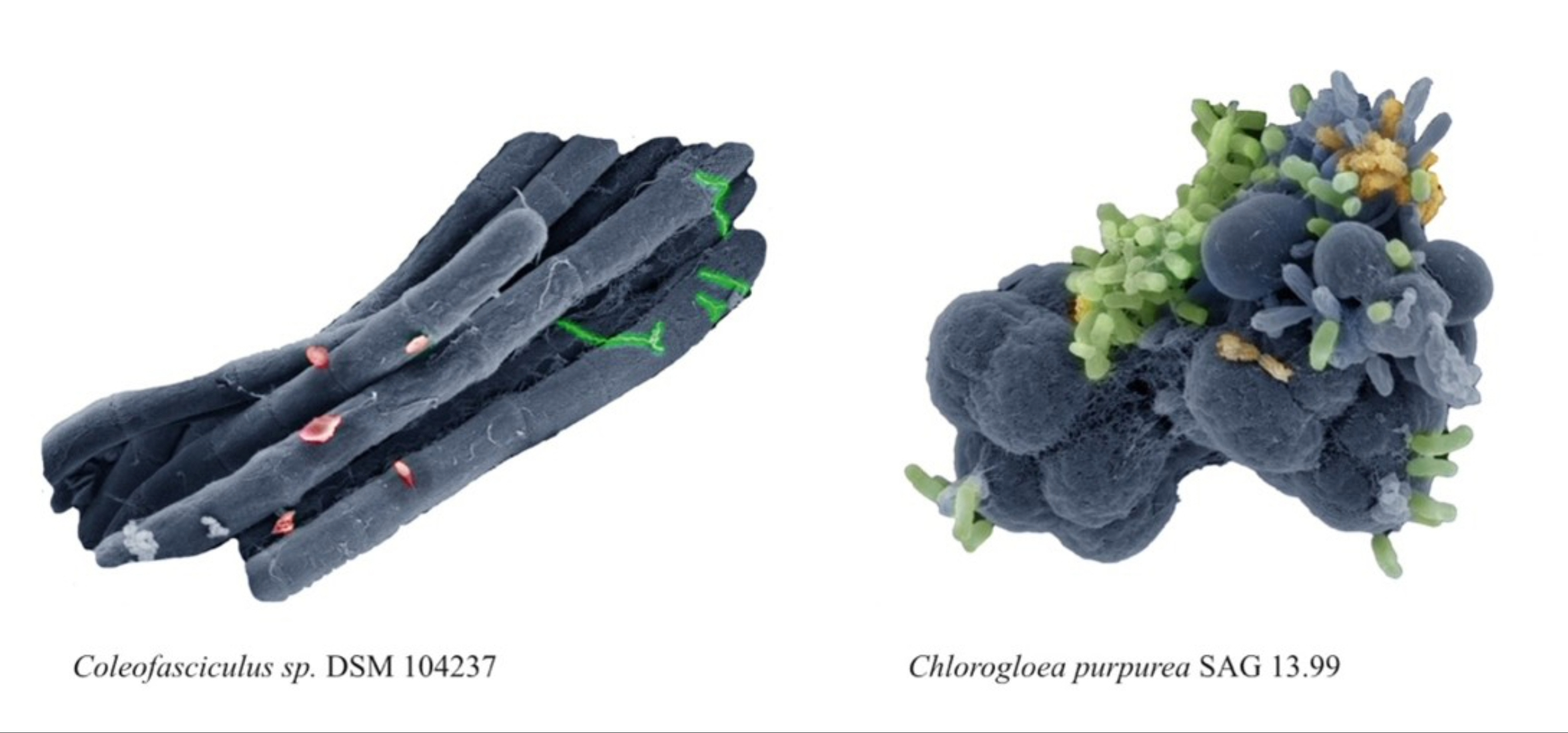
Electron microscope images of non-axenic cultures of two cyanobacteria (Coleofasciculus, Chlorogloea). The various associated bacteria are highlighted in color
Microbiome analyses provide new insights into the biodiversity and biological potential of bacterial consortia
BRAUNSCHWEIG, LOWER SAXONY AREA, GERMANY, May 13, 2026 /EINPresswire.com/ -- Researchers at the Leibniz Institute DSMZ-German Collection of Microorganisms and Cell Cultures have conducted high-resolution investigations of the so-called cyanosphere, the ‘housing community’ of cyanobacteria. The focus was on identifying previously unknown associated bacteria that play a crucial role in the vitality of the cyanobacteria. Particular attention was paid to a newly discovered myxobacterium capable of performing photosynthesis. The researchers led by Prof. Dr Jörn Petersen from the Department of Microorganisms at the Leibniz Institute DSMZ published their findings in the renowned journals Environmental Microbiology Reports [1] and ISME Communications [2].
The cyanobacterial microbiome
In their research, scientists at the DSMZ have examined more than 30 cultures of the filamentous marine cyanobacterium Coleofasciculus, which, as the most significant primary producer of biological mats in the intertidal zone, also plays an important role in coastal protection. “Since it is not always easily possible to grow the most interesting associated bacteria in pure culture in the laboratory, we initially had to rely on modern methods in molecular biology,” explains Professor Petersen. “We were able to demonstrate that high-throughput sequencing of the complete 16S rRNA gene with the adjacent ITS region (16S-ITS) followed by metagenomics are the crucial tools for a modern and comprehensive characterization of these complex consortia.” Just in the culture of the cyanobacterium Coleofasciculus sp. WW12, more than 70 different taxa of associated bacteria were identified [3]. The genome data show that most of these bacteria have not yet been scientifically described. The researchers suspect that they represent more than 60 new species, of which they have already successfully cultivated the first representatives. Of particular interest is the discovery of a myxobacterium, Candidatus Photomyxococcus marinus gen. nov., sp. nov.. This group of bacteria is known for producing metabolites of medical and biotechnological importance. They feed on other microorganisms, which they ‘hunt’. “In this case, however, the newly discovered bacterium also possesses the complete repertoire of genes required to perform photosynthesis. In line with an environmental metagenome study, this is the world’s first discovery of a phototrophic myxobacterium that is already ‘cultivated’,” explains Pia Marter, PhD student at the Leibniz Institute DSMZ and first author of both publications. The reason why the bacterium has developed a second strategy for energy production should now be investigated further. In parallel, the researchers will attempt to grow the myxobacterium in pure culture. This shall facilitate future studies of the organism and allow for a better understanding of the benefits of flat-sharing.
The Cyanosphere – an undiscovered treasure trove of biodiversity
Cyanobacteria, formerly known as ‘blue-green algae’, are found all over the world and live in a wide variety of habitats. As they utilize light energy and release oxygen in the same way as plants, they have long been studied by botanists and still occupy a special place in microbiology today. Since the laborious establishment of pure cultures is not a necessary prerequisite for the scientific description of new species, most isolated cyanobacteria also contain a multitude of unknown associated bacteria. The deposit of such cyanobacterial isolates at the DSMZ ensures comprehensive coverage of the biological diversity of this important group of microorganisms. “Through our investigations as part of the collection-based research project, we were able to demonstrate that we are capable of stably culturing even the ‘roommates’ of the cyanobacteria over long periods of time,” summarizes Prof. Dr Jörn Petersen. “Thus, these bacteria and their associated flora represent a kind of time capsule in which the original ecosystem is preserved.” The DSMZ makes the Coleofasciculus microbiome available to researchers worldwide as a consortium. Some bacteria from this community have already been isolated and are offered as pure cultures [4].
[1] Marter P., Freese H.M., Ringel V., Brinkmann H., Pradella S., Rohde M., Jarek M., Spröer C., Wagner‐Döbler I., Overmann J., Bunk B. and Petersen J. (2025) Superior resolution profiling of the Coleofasciculus microbiome by amplicon sequencing of the complete 16S rRNA gene and ITS region. Environ Microbiol Rep 17(1). 10.1111/1758-2229.70066
[2] Marter P., Brinkmann H., Freese H.M., Ringel V., Bunk B., Jarek M., Koblížek M., Wagner-Döbler I. and Petersen J. (2026) The microbiome of marine mat-forming cyanobacteria - A microcosm of taxonomic novelty and phototrophic diversity. ISME Commun 6: ycag041. 10.1093/ismeco/ycag041
[3] Petersen J. (2025) Verborgene Vielfalt in Kultur: das Mikrobiom der Cyanobakterien. Biospektrum (Heidelb) (31): 518–521. 10.1007/s12268-025-2533-6
[4] https://www.dsmz.de/collection/catalogue/microorganisms/special-groups-of-organisms/ coleofasciculus-microbiome
Leibniz Institute DSMZ
The Leibniz Institute DSMZ-German Collection of Microorganisms and Cell Cultures is the world's most diverse collection of biological resources (bacteria, archaea, protists, yeasts, fungi, bacteriophages, plant viruses, genomic bacterial DNA as well as human and animal cell lines). Microorganisms and cell cultures are collected, investigated and archived at the DSMZ. As an institution of the Leibniz Association, the DSMZ with its extensive scientific services and biological resources has been a global partner for research, science and industry since 1969. The DSMZ was the first registered collection in Europe (Regulation (EU) No. 511/2014) and is certified according to the quality standard ISO 9001:2015. As a patent depository, it offers the only possibility in Germany to deposit biological material in accordance with the requirements of the Budapest Treaty. In addition to scientific services, research is the second pillar of the DSMZ. The institute, located on the Science Campus Braunschweig-Süd, accommodates more than 94,400 bioresources and has around 210 employees. www.dsmz.de
The Leibniz Association
The Leibniz Association connects 96 independent research institutions that range in focus from natural, engineering and environmental sciences to economics, spatial and social sciences and the humanities. Leibniz Institutes address issues of social, economic and ecological relevance. They conduct basic and applied research, including in the interdisciplinary Leibniz Research Alliances, maintain scientific infrastructure, and provide research-based services. The Leibniz Institutes employ around 21,400 people, including 12,200 researchers. The financial volume amounts to 2,3 billion euros. www.leibniz-gemeinschaft.de
PhDr. Sven David Mueller, M.Sc.
Leibniz-Institut DSMZ
+49 531 2616300
email us here
Visit us on social media:
LinkedIn
Bluesky
Instagram
Facebook
YouTube
X
Other
Legal Disclaimer:
EIN Presswire provides this news content "as is" without warranty of any kind. We do not accept any responsibility or liability for the accuracy, content, images, videos, licenses, completeness, legality, or reliability of the information contained in this article. If you have any complaints or copyright issues related to this article, kindly contact the author above.
