

Just Released: A Science-Based Reference for Distilled Spirits Education, Training, and Professional Evaluation
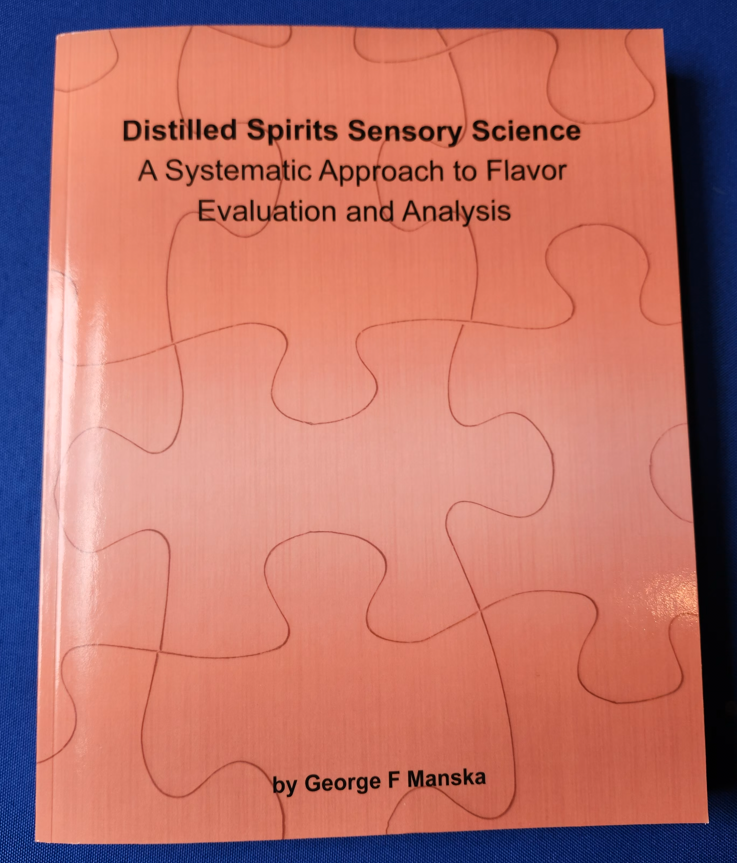
Distilled Spirits Sensory Science
Provides educators, distillers, beverage professionals, judges, and institutional programs with a systematic framework for evidence-based spirits evaluation.
LAS VEGAS, NV, UNITED STATES, June 5, 2026 /EINPresswire.com/ -- Sensorium Publishing Co., LLC announces the availability of Distilled Spirits Sensory Science: A Systematic Approach to Flavor Evaluation and Analysis, a comprehensive educational reference developed for academic programs, distilleries, spirits professionals, judges, beverage educators, hospitality trainers, and serious learners who require a more disciplined foundation for evaluating distilled spirits.The book is designed for use in distilled spirits education, beverage sensory instruction, professional staff training, tasting-room education, judging preparation, sensory-panel development, and institutional learning environments where traditional tasting language alone is insufficient.
For generations, appreciation of spirits has relied heavily on tradition, inherited tasting rituals, subjective tasting notes, and brand-centered language. While tradition may preserve useful experience, it does not by itself explain how ethanol, aroma compounds, sensory physiology, glassware geometry, expectation, memory, trigeminal stimulation, and evaluation conditions affect what the drinker actually perceives.
Distilled Spirits Sensory Science addresses that gap by presenting spirits evaluation as a systematic applied-science discipline. The book integrates sensory anatomy; olfaction, gustation, and trigeminal responses; ethanol behavior; aroma chemistry; production variables; sensory bias; glassware effects; and controlled evaluation procedures into a structured framework for education and professional practice.
“Distilled spirits are among the most difficult beverages to evaluate because ethanol is not a passive carrier,” said George F. Manska, author of Distilled Spirits Sensory Science, inventor of the NEAT spirits glass, and founder of sensory-science-focused beverage research enterprises. “Ethanol affects aroma delivery, nasal comfort, perception, and evaluator confidence. A serious industry cannot improve evaluation standards if it treats those effects as secondary or invisible.”
The book is intended to support a changing industry in which distillers, educators, tasting-room staff, judges, distributors, beverage programs, and serious professionals must explain spirits with greater accuracy. The shift is not from enjoyment to laboratory detachment. but from unsupported habit to informed sensory method.
The spirits industry has advanced significantly in fermentation control, distillation technology, maturation management, quality assurance, packaging, distribution, and consumer education. Yet many public-facing tasting methods still rely on phrases, rituals, and assumptions that are rarely examined scientifically. Distilled Spirits Sensory Science provides a foundation for closing that gap through structured, science-based sensory education.
The book is especially relevant for:
Academic beverage, fermentation, distillation, food science, and hospitality programs
Distillery staff training and visitor-center education
Professional tasting rooms and brand education teams
Spirits judges, competitions, and sensory panels
Distributors and beverage educators
Corporate training and professional development programs
Advanced enthusiasts seeking a disciplined evaluation framework
Libraries and institutional collections supporting beverage education
The text is organized as a serious instructional reference rather than a casual tasting guide. Its purpose is to help readers understand why spirits evaluation is difficult, how sensory perception is shaped, where common evaluation errors arise, and how controlled methods can improve consistency, vocabulary, and interpretation.
Key areas addressed include:
The biological basis of smell, taste, and trigeminal perception
Ethanol’s role in aroma delivery and sensory interference
The limits of subjective tasting notes
Expectation, bias, adaptation, and sensory memory
How glassware and method affect vapor presentation
Raw materials, fermentation, distillation, maturation, and production variables
Structured evaluation procedures for serious spirits assessment
For educators, the book supports structured course development in distilled spirits evaluation and beverage sensory science. For colleges, universities, and professional programs, it provides a mechanism-based reference suitable for serious learners. For distilleries and spirits companies, it supports staff development, internal training, consumer education, and technical communication. For judges and reviewers, it is a foundation for recognizing perceptual limits and improving evaluation discipline.
This release is a statement for professional modernization. As distilled spirits continue to grow in technical sophistication and consumer interest, the industry needs educational tools that explain what is actually occurring in the glass, in the vapor space, in the nose, in the mouth, and in the evaluator's brain.
Distilled Spirits Sensory Science is available through Sensorium Publishing Co., LLC. and IngramSpark, Individual, academic, professional, bulk, bookstore, and institutional ordering information is available at:
https://sensoriumllc.com
Academic adoption inquiries, review-copy requests, institutional orders, distillery training inquiries, professional education requests, media inquiries, and bulk-purchase information may be directed to:
George F. Manska
Sensorium Publishing Co., LLC
Phone: 702.332.7305
Email: george@arsilica.com
Book/Media Email: info@sensoriumllc.com
About the Author
George F. Manska is the author of Distilled Spirits
George F Manska
Arsilica, Inc
+1 702-332-7305
email us here
Visit us on social media:
LinkedIn
Instagram
Facebook
Other
Legal Disclaimer:
EIN Presswire provides this news content "as is" without warranty of any kind. We do not accept any responsibility or liability for the accuracy, content, images, videos, licenses, completeness, legality, or reliability of the information contained in this article. If you have any complaints or copyright issues related to this article, kindly contact the author above.
