

Integrating Full-Link Cloning Technology: Cloud Clone Delivers All-in-One Cloning Solutions
From Gene Manipulation to Finished Reagents: Cloud‑Clone Cloud‑Style Resource Platform for Biomedicine
HUSTON, TX, UNITED STATES, August 10, 2026 /EINPresswire.com/ -- What Forms the Core Research Framework of Biomedicine? Three Major Categories of Cloning Technology
Cloning technologies fall into three primary classifications: molecular cloning (DNA cloning), cell cloning, and organism cloning (reproductive cloning). Organism cloning is further split into therapeutic cloning and reproductive cloning. Molecular, cell and organism cloning together form the core framework of cloning technology. Gene cloning, protein cloning and antibody cloning are all sub-branches of molecular cloning applications. Essentially, organism cloning is a derivative of cell cloning, distinguished only by whether cell differentiation occurs during cell proliferation.
As an integrated service platform, Cloud Clone mirrors the concept of cloud computing in the information technology sector — featuring massive resources, flexible access and on-demand availability. Leveraging full-link cloning technology, Cloud Clone builds an extensive, agile and high-performance resource library of proteins, antibodies and immunoassay reagents, delivering end-to-end all-in-one solutions spanning from gene manipulation to finished products for research institutions and biopharmaceutical enterprises worldwide.
Three Iterative Breakthroughs of Core Cloning Technologies: Three Transformative Leaps in Cloning Development
1. Molecular Cloning: The Foundational Milestone
Emerging in the 1970s, molecular cloning lays the groundwork for the entire cloning technology system. Its core mechanism relies on restriction endonucleases and DNA ligases to insert target DNA fragments into vectors in vitro and generate recombinant DNA molecules, which are then introduced into host cells for amplification. This technology enables scientists to precisely isolate and manipulate individual genes, establishing a solid foundation for gene function analysis, protein expression and genomics research. It marks the pivotal starting point of modern molecular biology.
2. Cell Cloning: From Single Cells to Monoclonal Antibodies
Developed throughout the mid-to-late 20th century, cell cloning refers to the formation of cell populations with identical genetic backgrounds via mitosis from a single progenitor cell. Early protocols isolated single cells through physical and chemical approaches such as limiting dilution for cultivation and proliferation. It has become an indispensable tool in cell biology research, supporting pure cell line construction, investigation of cell differentiation potential and screening of functional cell populations.
The hybridoma technique stands as a landmark application of cell cloning. It fuses B lymphocytes with myeloma cells, followed by clonal screening to obtain stable hybridoma cell lines that secrete single specific antibodies, enabling large-scale production of monoclonal antibodies. Advancements in stem cell research have further expanded the scope of cell cloning. In vitro cultured pluripotent stem cell clones provide critical cell sources for regenerative medicine.
3. Organism Cloning: From Dolly the Sheep to the Future of Regenerative Medicine
Organism cloning (reproductive cloning) represents the most advanced yet controversial form of cloning technology, with the birth of Dolly the sheep in 1996 as its landmark event. It mainly adopts Somatic Cell Nuclear Transfer (SCNT): the nucleus of a differentiated somatic cell is transplanted into an enucleated oocyte. Reprogramming factors within ooplasmic cytoplasm restore somatic cell nuclei to a totipotent state, which further develops into a new individual carrying nearly identical genetic material as the nuclear donor.
This technology has been successfully applied to numerous mammalian species including dogs, pigs and non-human primates, widely utilized for expanding elite livestock breeds, conserving endangered species and constructing disease animal models.
Therapeutic cloning targets clinical translational applications. It generates blastocysts via somatic cell nuclear transfer and isolates inner cell masses to establish embryonic stem cell lines. Theoretically, these stem cells can differentiate into diverse cell types for transplantation therapy, circumventing the risk of immune rejection. Despite remaining technical bottlenecks, therapeutic cloning has pioneered a vital research direction for regenerative medicine.
Precise Empowerment via Subdivided Technologies to Accelerate Industrial Implementation & Upgrading
Gene Cloning
Also termed DNA cloning, gene cloning is the core application of molecular cloning, focusing on the isolation, amplification and expression of specific genes. It supplies core genetic materials for subsequent protein preparation and antibody development, serving as the primary upstream step for industrialized cloning technologies.
Protein Cloning
Protein cloning focuses on high-efficiency expression and purification of target proteins. Based on gene cloning, target genes are introduced into host cells to achieve large-scale protein synthesis, resolving the pain points of low yield and difficult extraction of natural proteins. Recombinant protein pharmaceuticals, diagnostic reagents in healthcare, and industrial enzyme preparations all depend heavily on protein cloning technology.
Antibody Cloning
As a core technology for biological diagnosis and therapeutics, antibody cloning generates specific antibodies to deliver precise tools for disease detection and targeted therapy. From traditional polyclonal antibody preparation to modern recombinant monoclonal antibody development, continuous technical iteration accommodates diverse application scenarios and propels precision medicine to new heights.
Empowerment Through Full-Link Integrated Technology: Cloud-Clone Products Gain Global Recognition
Backed by a mature full-spectrum cloning technology system, Cloud-Clone owns end-to-end R&D capabilities covering gene manipulation to finished product manufacturing. Molecular cloning enables precise regulation of gene fragments, gene cloning retrieves target genes, and protein cloning facilitates efficient synthesis of recombinant proteins. To date, Cloud-Clone has developed over 18,000 recombinant protein products including Interleukin-4 and Calcitonin, providing high-quality research tools for gene editing and drug discovery.
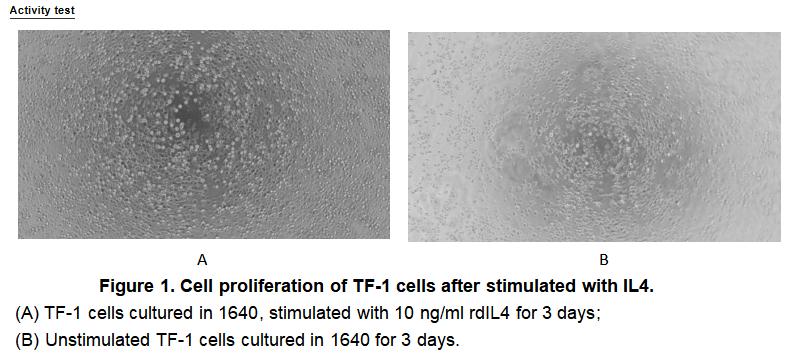
Figure 1. Cell proliferation of TF-1 cells after stimulated with IL4.
(A) TF-1 cells cultured in 1640 medium, stimulated with 10 ng/mL recombinant IL4 for 3 days; (B) Unstimulated TF-1 cells cultured in 1640 medium for 3 days.
In antibody R&D, Cloud-Clone leverages hybridoma cell cloning technology to launch premium monoclonal antibodies such as Creatine Kinase antibody, alongside a full portfolio of polyclonal and recombinant antibodies covering hot research fields including oncology, neuroscience and inflammatory immunology.
Supported by an extensive library of specific antibodies, Cloud-Clone’s ELISA kits have earned recognition from top international journals. Multiple kits served as core experimental tools in research published in high-impact journals including Nature Medicine and Nature Communications since early 2026, ensuring high accuracy of research data.
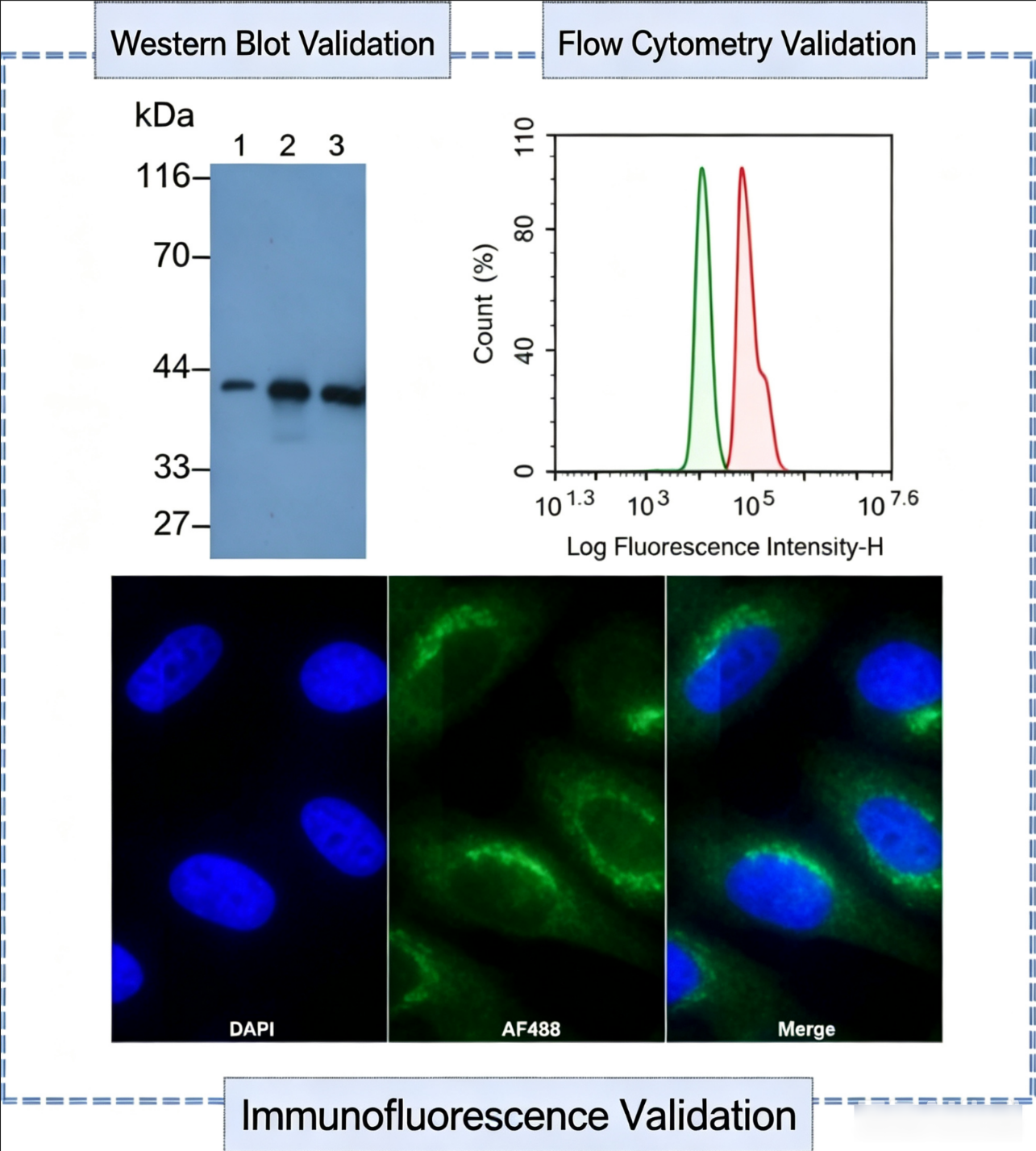
Figure 2. Multi-dimensional validation of Creatine Kinase monoclonal antibody: Western Blot, Flow Cytometry and Immunofluorescence
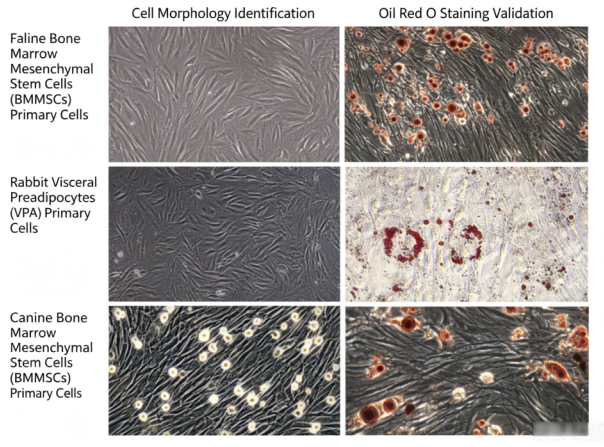
Additionally, Cloud-Clone provides primary cell products across multiple species including human, rat, mouse, rabbit, canine and feline, encompassing a wide range of fully functional differentiated stem cells such as feline bone marrow mesenchymal stem cells, canine bone marrow mesenchymal stem cells and rabbit visceral preadipocytes, supplying abundant experimental materials for cell biology research.
Figure 3. Morphology identification and Oil Red O staining validation of primary cells (feline BMMSCs, rabbit visceral preadipocytes, canine BMMSCs)
Cloud-Clone: An All-in-One Solution Integrating Full-Spectrum Cloning Technologies
A leading biotech enterprise, Cloud-Clone has years of deep expertise in cloning technology. It integrates molecular cloning, cell cloning, organism cloning, gene cloning, protein cloning, antibody cloning and other full-chain technologies to deliver comprehensive all-in-one cloning solutions.
Cloud-Clone’s core competitive advantage lies in full-chain integration + universal cross-scenario compatibility:
1.Technical Edge: Proprietary self-developed platforms for recombinant protein and antibody R&D enable independent in-house antigen and antibody development and production. Quality control starts at raw material sources, effectively addressing the widespread industry challenge of significant batch-to-batch variation in traditional cloning workflows.
2.Product Portfolio: A vast catalog of more than 70,000 cloning-related products, covering monoclonal antibodies, polyclonal antibodies, recombinant proteins, primary cell lines and more, catering to global demands across molecular biology, cell biology, clinical diagnostics, agricultural breeding and other sectors.
Future Outlook
With continuous technical iteration and innovation, Cloud-Clone will further integrate full-spectrum cloning resources, optimize technical workflows and lower barriers to industrial and academic adoption. The company aims to expand the application boundaries of cloning technology, supporting breakthroughs in scientific research, advancements in medical care, sustainable agricultural development and biodiversity conservation worldwide.
About Cloud-Clone Corp.
Cloud-Clone Corp. is dedicated to the development and production of high-quality immunoassay reagents and detection solutions. With a focus on antibody engineering, multiplex assay development, and cross-platform compatibility, the company provides research tools designed to support precision medicine and advanced biomedical investigation globally. Our core products and services include the research and development of proteins, antibodies, ELISA kits, primary cells, and multiplex cytokine assay kits, as well as professional CRO services to fully meet the diverse needs of biomedical research and related fields.
For more information about Cloud-Clone Corp, visit www.cloud-clone.com.
CLOUD-CLONE CORP.(CCC)
Tel: 001-832-538-0970, 0086-27-8425-9552
Email: mail@cloud-clone.com, sales@cloud-clone.us
Visit us on social media:
LinkedIn: https://www.linkedin.com/company/cloud-clone-corp/
Instagram: https://www.instagram.com/cloudclonecorp2023/
TickTok: https://www.tiktok.com/@cloudclonecorp2026
SuKi Duan
CLOUD-CLONE CORP.WUHAN
email us here
Visit us on social media:
LinkedIn
Instagram
TikTok
X
Legal Disclaimer:
EIN Presswire provides this news content "as is" without warranty of any kind. We do not accept any responsibility or liability for the accuracy, content, images, videos, licenses, completeness, legality, or reliability of the information contained in this article. If you have any complaints or copyright issues related to this article, kindly contact the author above.
